




For accounting professionals, moving from a staff accountant role to a senior accountant position is often a common step in an accounting career path. While both positions play important roles within an organization’s finance department, there are notable differences in responsibilities, experience requirements, and career expectations.
Understanding the differences between a staff accountant and a senior accountant can help professionals plan their career growth and help employers better define accounting roles within their organizations.
What Does a Staff Accountant Do?
Staff accountants are typically responsible for the day-to-day accounting activities that help keep financial records accurate and up to date. Many professionals begin their accounting careers in staff accountant jobs, where they develop a strong foundation in accounting principles and financial reporting.
Common staff accountant responsibilities include:
- Preparing journal entries
- Reconciling bank and general ledger accounts
- Assisting with month-end and year-end close processes
- Maintaining financial records
- Processing accounts payable and accounts receivable transactions
- Supporting audits and financial reporting activities
Because staff accountant jobs often serve as an entry point into the profession, these positions provide valuable exposure to multiple areas of accounting and finance.
What Does a Senior Accountant Do?
Senior accountants typically take on more complex accounting functions and may oversee portions of the accounting process. Many professionals move into senior accountant jobs after gaining several years of experience and demonstrating strong technical accounting skills.
Common senior accountant responsibilities include:
- Reviewing financial statements and reports
- Managing month-end and year-end close activities
- Analyzing financial data and identifying discrepancies
- Assisting with budgeting and forecasting
- Supporting external audits
- Mentoring junior accounting staff
- Improving accounting processes and internal controls
Senior accountant jobs often require greater independence and problem-solving skills, as well as the ability to work closely with management and other departments.
Staff Accountant vs Senior Accountant: Key Differences
Although both roles contribute to accurate financial reporting, several factors distinguish a staff accountant from a senior accountant.
Experience Level
One of the biggest differences between staff accountant jobs and senior accountant jobs is experience.
Staff accountants often have between zero and three years of experience, while senior accountants typically have three to five or more years of progressive accounting experience.
Many employers also prefer senior accountants to have advanced certifications or be actively pursuing credentials such as a CPA license.
Scope of Responsibilities
Staff accountant responsibilities generally focus on executing accounting tasks and maintaining financial records.
Senior accountant responsibilities often involve reviewing work, performing analysis, solving accounting issues, and helping improve processes.
As professionals advance along the accounting career path, they are often expected to move beyond transactional work and contribute more strategically to financial operations.
Leadership Expectations
While staff accountants primarily focus on their own assignments, senior accountants may provide guidance to junior team members and assist with training.
Leadership experience can become increasingly important for professionals interested in future opportunities such as accounting manager, controller, or finance director roles.
Accounting Career Path
For many accounting professionals, the transition from staff accountant to senior accountant is an important step in career progression.
A typical accounting career path may look like:
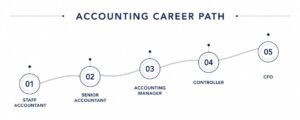
Advancement often depends on a combination of technical expertise, communication skills, leadership ability, and industry knowledge.
Professionals seeking career growth can strengthen their advancement opportunities by:
- Developing advanced Excel and financial reporting skills
- Gaining experience with ERP and accounting software systems
- Pursuing CPA certification or other accounting credentials
- Participating in cross-functional projects
- Improving communication and leadership capabilities
These skills can help prepare candidates for more complex responsibilities and future leadership positions.
When Should You Pursue a Senior Accountant Role?
Determining when to pursue senior accountant jobs is not always straightforward. While experience requirements vary by employer, readiness is often determined by responsibilities rather than years of experience alone.
You may be ready to pursue senior accountant jobs if you regularly:
- Manage key portions of the month-end or year-end close process
- Prepare financial reports with limited supervision
- Support audits and respond to auditor requests
- Analyze financial data and resolve discrepancies independently
- Participate in process improvement initiatives
- Serve as a resource for newer accounting team members
When evaluating senior accountant jobs, consider both the title and the opportunities for professional development. Exposure to financial reporting, budgeting, audits, process improvements, and leadership responsibilities can help support long-term career growth and prepare professionals for future roles such as Accounting Manager or Controller.
 Founded in 1998, Professional Alternatives is an award-winning recruiting and staffing agency that leverage technology and experience to deliver top talent. Our team of experienced staffing agency experts is here to serve as your hiring partner. Contact us today to get started!
We're proud to serve the following locations:
Houston / Spring / Katy / The Woodlands / Humble / League City / Sugar Land / Irving / Dallas / Richardson / Lewisville / Plano / Arlington / Austin / San Antonio / Waco / El Paso / Fort Worth / Chicago / Seattle / Los Angeles / San Francisco / Tampa / Charlotte / Nashville / Washington DC / Boston / Philadelphia / New Orleans / Oklahoma City
Recent News & Insights
How to Write a Resume That Gets Read
Most resumes are not rejected because the candidate lacks experience. They are passed over because that experience is…

Facilities Manager: Career Path and Pay
When a company opens a new headquarters, a hospital adds a wing, or employees return to the office…

How to Become a CPA in Texas: Steps and Timeline
The CPA license is one of the most reliable ways to move up in accounting, but the path…